Water problems have a way of showing up at the most inconvenient times. You might notice an unpleasant taste in your morning tea, stubborn white marks on bathroom taps, or a washing machine that seems to collect scale far too quickly. Before long, you’re searching for water treatment options and wondering whether one filter can solve everything.
That’s where things can get confusing. Some systems treat water as it enters the house, while others focus on a single tap or appliance. There are also specialised treatment methods designed to deal with particular contaminants, and choosing between them isn’t always straightforward.
The best option depends on what is happening with your water, how much of it needs treatment, and what you’re hoping to achieve. Understanding the differences can save you money and help you avoid buying equipment that does more than your household actually needs.
Start by Identifying the Problem
Before comparing products, take a closer look at your water supply. Does the water have an unusual smell? Are there visible particles in a bucket? Do taps develop mineral deposits even after regular cleaning? These clues can help you decide what to investigate, although they don’t confirm whether water is safe to drink.
Your water source matters, too. Municipal supplies are generally treated before distribution, but old plumbing, damaged pipes, and poorly maintained storage tanks can affect water quality. Borewell water may contain naturally occurring minerals, iron, or other substances depending on local geology.
A suitable laboratory test is often the best starting point, especially when the concern involves drinking water safety. Testing can help identify the contaminants present and guide you towards a treatment method that has been shown to reduce them.
Without that information, it’s easy to buy a system based on a salesperson’s recommendation rather than an actual need. And honestly, there’s little point spending money on a filter that doesn’t address the problem you’re experiencing.
When Whole-Home Treatment Makes Sense
Imagine stepping into the shower and noticing that the glass doors are covered with stubborn mineral spots. Your kitchen tap has the same problem, and the washing machine seems to need descaling more often than you’d like. In a situation like this, treating only the water coming from your drinking tap may not be enough.
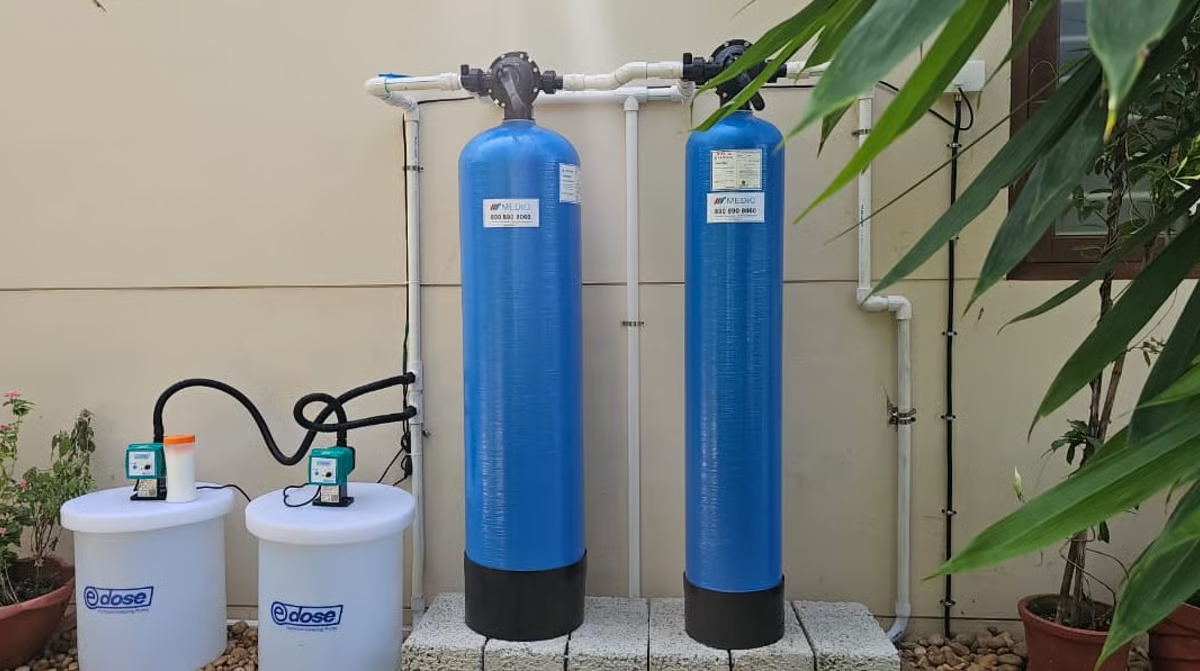
A whole-home water treatment system is installed where water enters the property, allowing treated water to reach multiple outlets. Depending on the equipment, it can help address concerns such as sediment, hardness, or certain other contaminants throughout the plumbing system.
For example, a properly selected water softener can reduce calcium and magnesium, the minerals responsible for hard water. This may help limit scale buildup on fixtures, water heaters, and appliances. A suitable sediment filtration system can also capture suspended particles before they travel through household pipes.
However, whole-home treatment isn’t automatically the best choice for every property. It can involve a higher initial investment, additional installation work, and ongoing maintenance. Some systems need drainage, electricity, or sufficient space near the incoming water connection.
There’s another important consideration: a whole-house filter must be appropriate for the contaminant and the volume of water being used. A system designed to reduce sediment, for instance, won’t necessarily remove dissolved chemicals or harmful microorganisms.
Point-of-Use Systems Offer a More Targeted Approach
Not every water problem affects the entire home. Sometimes the main concern is simply the taste of drinking water, or perhaps you’d like an additional treatment step for water used in cooking.
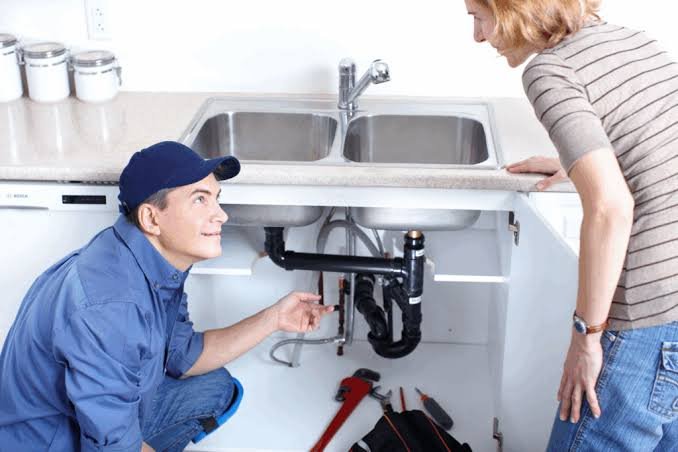
A point-of-use system treats water at or near a specific outlet. Common examples include countertop filters, faucet-mounted units, under-sink filtration systems, and drinking water purifiers.
These systems can be a practical option for smaller households, renters, or anyone who wants to focus on drinking and cooking water without modifying the entire plumbing system. They’re often less expensive to install than whole-home equipment, although costs vary considerably by technology and capacity.
Activated carbon filters, for example, can improve taste and reduce chlorine and certain organic compounds when the product is designed for that purpose. Reverse osmosis systems can reduce many dissolved substances, depending on their specifications and tested performance.
The limitation is fairly simple: treatment is local. Water coming from an untreated bathroom tap or shower remains untreated unless another system is installed.
That may be perfectly fine if your concern is limited to drinking water. But if hard water is affecting every tap in the house, a small kitchen filter won’t prevent scale from forming in the shower or water heater.
What Are Specialty Media Systems?
Some water quality problems require a more specific solution than a general-purpose filter can provide. This is where specialty media can play an important role.
These treatment materials are designed to target particular substances or improve performance under certain conditions. Depending on the product, they may help reduce iron, manganese, hydrogen sulfide, or other contaminants that affect water quality.
Consider a household whose borewell water leaves orange-brown stains around sinks and bathroom fittings. Iron may be responsible, although testing is needed to establish the cause. A suitable iron treatment system might use specialised filtration media, oxidation, or a combination of processes.
Another home might have water with a noticeable rotten-egg smell associated with hydrogen sulfide. The appropriate treatment depends on the concentration and other water characteristics, so a generic carbon cartridge may not be enough.
Specialty media systems need careful selection. Water chemistry, pH, flow rate, contaminant concentration, and competing substances can all affect performance. Some media also require periodic backwashing, regeneration, or replacement.
For that reason, these systems are best chosen using reliable test results and professional guidance when the problem is complex. A treatment method that works well for one borewell may perform poorly in another.
Can You Combine Different Treatment Systems?
Yes, and sometimes doing so makes good sense. A home may benefit from a whole-house sediment filter to protect plumbing equipment, a softener to manage hardness, and a separate drinking water filter for taste or a specific dissolved contaminant.
The important point is that every stage should have a clear purpose. Adding more filters doesn’t automatically produce safer or better-tasting water.
For instance, a sediment filter can protect downstream equipment from suspended particles, but it won’t remove dissolved salts. A carbon filter may reduce chlorine taste, yet it shouldn’t be relied upon to remove every chemical contaminant. If microbial contamination is a concern, a suitable disinfection method may be necessary.
The treatment sequence matters as well. Some systems work best when particles are removed before water reaches a more sensitive treatment stage. Others may need pretreatment to operate effectively.
Ask a qualified installer to explain why each component is included and what it is expected to accomplish. If the explanation is vague, it’s reasonable to seek a second opinion before spending your money.
Think Beyond the Purchase Price
The initial cost is only one part of choosing a treatment system. Replacement cartridges, electricity, servicing, water consumption, and repairs can add up over time.
Check how often the equipment needs maintenance and whether replacement parts are readily available. A less expensive system may become frustrating if its cartridges are difficult to find or unusually costly.
Also consider how much water your household uses each day. A system that works for two people may be unsuitable for a larger family with several bathrooms and heavy water demand.
Finally, make sure the product has credible performance data for the contaminants you want to reduce. Clear specifications and independent certifications are more useful than broad marketing promises.
Make the Choice That Fits Your Home
Choosing between whole-home, point-of-use, and specialty treatment doesn’t have to be complicated. Begin with the water problem itself, confirm it through appropriate testing, and then select a system designed to address it.
Whole-home treatment can make sense when a problem affects several outlets or appliances. Point-of-use filtration is often practical when drinking water is the main concern. Specialty media may be necessary for specific contaminants that ordinary filters cannot adequately manage.
There’s no single system that suits every household. The smartest investment is one that fits your water quality, daily routine, and budget while delivering the performance you actually need. With a little research and proper maintenance, better water can become a straightforward part of everyday life rather than another household headache.