Blog

  • Enterprise SEO Services Dubai: Managing Arabic-Language Campaigns at Scale

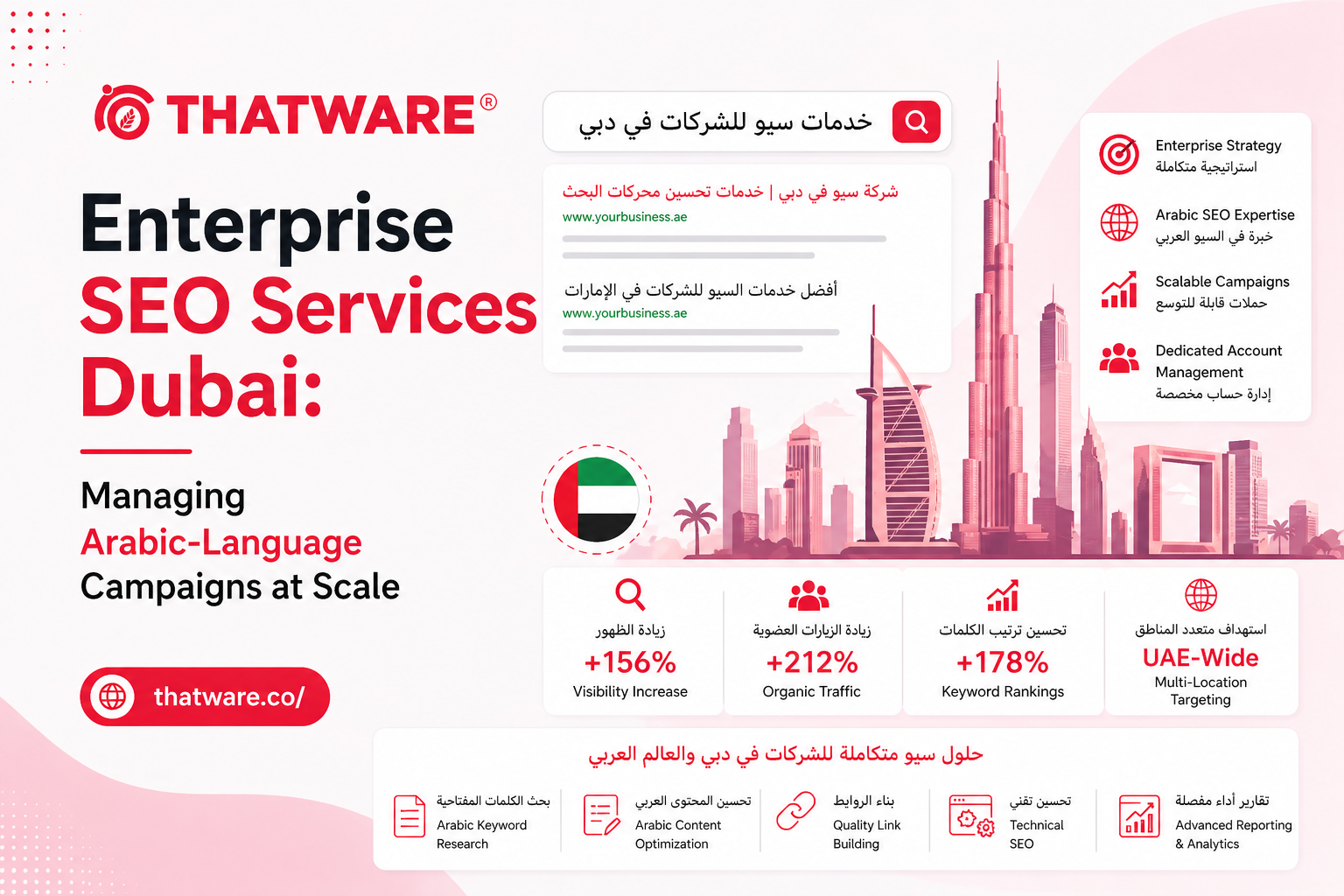
    Enterprise SEO Services Dubai: Managing Arabic-Language Campaigns at Scale

    Most enterprise brands entering the UAE market build their initial digital presence in English. The business community in Dubai operates predominantly in English, the expat population is large and commercially significant, and the path of least resistance is to lead with what you already have. English-first, Arabic-later becomes a strategy by default rather than by design.

    This approach works well enough in some industries and with some audiences. But for enterprise brands with genuine ambitions to reach the national population, to compete across the full UAE market rather than the expat subset, and to build organic visibility that compounds into a durable competitive position, Arabic-language SEO is not optional. It’s the dimension of the strategy that most competitors aren’t doing well, which makes it the opportunity most worth capturing.

    The Scale Problem Specific to Arabic

    Arabic-language content at enterprise scale introduces complexity that English-language operations don’t face. The language itself is bidirectional, which affects rendering, layout, and user experience in ways that require specific technical implementation. Arabic has formal and colloquial variants that search behavior reflects, meaning keyword research needs to account for how people actually search rather than how formal Arabic is written. And the content quality bar for Arabic audiences is different from the quality bar for English audiences in ways that direct translation doesn’t address.

    On the technical side, right-to-left text rendering needs to be implemented correctly at both the page level and the CMS level. Mixed-language pages with both Arabic and English content require careful attention to text direction declarations. These are solvable problems but they require deliberate implementation rather than assuming that a translated version of the English site will render correctly.

    Enterprise seo dubai campaigns that handle the Arabic dimension properly are addressing all of these layers: technical rendering, content quality, and keyword strategy calibrated to actual Arabic search behavior in the UAE market.

    Keyword Research Differences in Arabic UAE Search

    Arabic keyword research for UAE search is not the same as Arabic keyword research for the broader MENA market. UAE Arabic search behavior reflects the specific linguistic context of the country: a blend of Modern Standard Arabic, Gulf Arabic dialectal influences, and significant code-switching with English terms, particularly for commercial and technical queries.

    A keyword that has high search volume in Modern Standard Arabic may have lower volume in the UAE market where a Gulf Arabic variant or even an English term is more commonly used for the same concept. Enterprise keyword research for UAE Arabic campaigns needs to reflect actual UAE search behavior specifically, which requires market-specific data rather than extrapolation from broader Arabic search data.

    The competitive landscape for Arabic keywords is also often different from the English landscape. Some categories that are highly competitive in English have significantly less competition in Arabic, representing genuine opportunity for brands willing to invest in quality Arabic content.

    Content Quality at Enterprise Scale

    The content quality problem in Arabic enterprise SEO is partly a resourcing problem and partly a quality standard problem. Machine translation of English content into Arabic is not a viable enterprise content strategy. The output is typically detectable as translated, reads poorly to native Arabic speakers, and fails to reflect the cultural context that makes content credible to Arabic audiences.

    High-quality Arabic content requires native Arabic writers with subject matter expertise in the relevant industry vertical. For highly regulated industries like financial services, healthcare, and legal services operating in the UAE, content also needs to reflect local regulatory context rather than importing frameworks from other Arabic-speaking markets.

    At enterprise scale, producing this content requires building or partnering with Arabic content teams that have genuine editorial capability, not just translation capability. The distinction matters both for content quality and for how search engines evaluate the content’s credibility.

    Enterprise seo uae programs running Arabic content at scale need editorial governance that maintains quality standards across high production volume, which is an operational challenge that requires explicit process design.

    Building Arabic Domain Authority

    Arabic-language authority building requires a different approach from English-language link building in the UAE. The Arabic web has its own ecosystem of credible publications, news sites, and industry resources that carry authority for Arabic search. Outreach and digital PR in Arabic requires Arabic-language communication, relationships with Arabic-language media, and an understanding of what constitutes a credible source in the specific industry context.

    This is genuinely difficult for brands without existing relationships in the Arabic media ecosystem. It takes longer to build than English-language authority in comparable markets, partly because the Arabic media landscape for certain industries is less fragmented and partly because building trust in any new market takes time.

    Enterprise brands that start this authority building early, before they need the rankings, consistently outperform those that treat it as something to figure out after the content is live.

    Measurement Infrastructure for Bilingual Campaigns

    Running parallel English and Arabic campaigns at enterprise scale requires measurement infrastructure that tracks performance separately by language and provides an integrated picture of the overall UAE organic program.

    Search Console segmented by language, analytics configured to track both Arabic and English organic traffic with appropriate attribution, and ranking tracking tools configured for Arabic query monitoring are all necessary components. Many enterprise brands running UAE campaigns are measuring English performance rigorously and Arabic performance loosely, which produces an incomplete picture of where the organic program is actually succeeding.

    The Arabic dimension often shows more variability than the English dimension because it’s less mature and more responsive to new investments. Monitoring it properly enables faster learning about what’s working in the Arabic-language campaign.

    Building this measurement rigor into the program from the beginning rather than retrofitting it later saves significant time and produces better strategic decisions throughout the campaign. Arabic-language SEO in the UAE is an investment with a genuine return for enterprise brands that do it properly. The ones that do it halfway tend to conclude it doesn’t work, when the real conclusion is that it requires real commitment.


  • How to File a Complaint Against Credit Card Recovery Agency: A Complete Guide

    How to File a Complaint Against Credit Card Recovery Agency: A Complete Guide

    Dealing with aggressive recovery calls or unfair practices can be stressful, especially when it involves credit cards. Many people face harassment, misinformation, or unethical behavior from recovery agents. If you’re going through something similar, it’s important to know your rights and the proper steps to take action. Filing a complaint against credit card recovery agency is not only your right but also a necessary step to protect yourself from harassment and financial abuse.

    Understanding Credit Card Recovery Practices

    Banks and financial institutions often hire third-party recovery agencies to collect outstanding dues. While these agencies are legally allowed to recover debts, they must follow strict guidelines set by regulatory bodies like the Reserve Bank of India (RBI). They cannot use threats, abusive language, or harassment tactics.

    If a recovery agent calls you repeatedly at odd hours, visits your home without notice, or behaves aggressively, it may be a violation of these guidelines. In such cases, you have every right to take legal action and report the misconduct.

    When Should You File a Complaint?

    You should consider filing a complaint if you experience:

    • Continuous harassment or threatening behavior
    • Calls at inappropriate hours (before 8 AM or after 7 PM)
    • Public humiliation or pressure tactics
    • Misleading information regarding dues
    • Unauthorized visits or intimidation

    These practices are not only unethical but also illegal in many cases. Acting early can help you avoid further stress and ensure your rights are protected.

    Steps to File a Complaint

    Filing a complaint is easier than most people think. Here’s a simple step-by-step process:

    1. Collect Evidence

    Before taking action, gather all relevant proof such as call recordings, messages, emails, or witness statements. This strengthens your case.

    2. Contact the Bank

    Start by reaching out to your credit card issuer. Most banks have a grievance redressal system. Clearly explain your issue and provide evidence.

    3. Use the Official Complaint Channel

    If the bank doesn’t resolve your issue, escalate it through official platforms. You can use the credit card complaint no provided by your bank or file a complaint through their website.

    4. Approach RBI Ombudsman

    If the issue remains unresolved, you can file a complaint with the RBI Ombudsman. This is a free and effective way to address grievances related to financial services.

    5. Legal Action

    In severe cases involving harassment or threats, you can file a police complaint or take legal action under consumer protection laws.

    Your Rights as a Customer

    Many people are unaware that they have strong rights when it comes to debt recovery. You are not obligated to tolerate harassment. Recovery agents must:

    • Respect your privacy
    • Communicate politely
    • Follow legal procedures
    • Provide accurate information

    If any of these rules are violated, you can take strict action against the agency and even claim compensation.

    Tips to Handle Recovery Agents

    While filing a complaint is important, handling the situation calmly can also help. Here are a few practical tips:

    • Stay polite but firm in your communication
    • Do not share personal or financial details unnecessarily
    • Request written communication instead of verbal discussions
    • Avoid confrontations and record interactions when possible

    These steps can help you maintain control of the situation while building a strong case if needed.

    Importance of Timely Action

    Ignoring harassment from recovery agencies can make the situation worse. Taking timely action not only protects you but also prevents such agencies from exploiting others. Filing a complaint creates accountability and ensures that financial institutions follow ethical practices.

    Final Thoughts

    Facing pressure from a credit card recovery agency can feel overwhelming, but you are not powerless. Understanding your rights and taking the correct steps can make a huge difference. Whether it’s contacting your bank, escalating the issue, or seeking legal help, every action counts.

  • Why Online Cement Purchases Are Changing Construction

    Why Online Cement Purchases Are Changing Construction

    The construction industry has quietly undergone a digital transformation. From project planning to procurement, everything is moving online—and cement buying is no exception. Whether you’re a contractor managing multiple sites or a homeowner planning a renovation, online cement purchases are becoming the go-to solution for convenience, cost efficiency, and reliability.

    The Shift Toward Digital Procurement

    Traditionally, buying cement meant visiting local dealers, negotiating prices, and arranging transportation. This process often consumed valuable time and introduced uncertainties in pricing and availability. Today, digital platforms have simplified this entire journey. With just a few clicks, you can compare brands, check real-time prices, and schedule deliveries directly to your site.

    The biggest advantage? Transparency. Online platforms clearly display product specifications, customer reviews, and delivery timelines, helping buyers make informed decisions without relying solely on middlemen.

    Cost Efficiency and Better Pricing

    One of the key reasons builders are turning to online platforms is pricing. When purchasing cement offline, prices can vary depending on location, dealer margins, and supply chain inefficiencies. However, online platforms often eliminate unnecessary intermediaries, resulting in more competitive rates.

    Additionally, many platforms offer bulk discounts, seasonal deals, and loyalty benefits. For large-scale projects, this can lead to significant cost savings. When you opt for bulk cement ordering, you not only secure better pricing but also ensure a steady supply throughout your construction phase.

    Convenience That Saves Time

    Time is money in construction, and delays can be costly. Online cement ordering platforms are designed to streamline procurement. You can place orders anytime—day or night—without worrying about store hours.

    Moreover, delivery scheduling is flexible. Whether you need same-day delivery or want to plan shipments in advance, online services cater to different project timelines. This level of convenience reduces downtime and keeps projects running smoothly.

    Wide Range of Options

    Another major benefit of buying cement online is access to a broader selection. Instead of being limited to what a local dealer has in stock, you can explore multiple brands and product types, including OPC, PPC, and specialty cements.

    This variety allows builders to choose the most suitable cement for specific construction needs. Whether it’s for residential buildings, commercial projects, or infrastructure development, having multiple options ensures better quality outcomes.

    Quality Assurance and Authenticity

    One concern buyers often have is product authenticity. Reputable online platforms address this by partnering directly with manufacturers or authorized distributors. This ensures that the cement you receive is genuine and meets industry standards.

    Many platforms also provide detailed product descriptions and certifications, giving buyers confidence in their purchase. Some even offer return or replacement policies in case of damage during transit.

    Streamlined Logistics and Delivery

    Logistics is a critical aspect of construction procurement. Online cement suppliers often have well-organized delivery networks that ensure timely and safe transportation. This minimizes the risk of delays or material shortages.

    For large projects, consistent supply is crucial. Bulk ordering options help maintain inventory levels, preventing interruptions in construction work. Scheduled deliveries also reduce the need for on-site storage, which can be a challenge in urban areas.

    Ideal for Both Small and Large Projects

    Whether you’re building a single home or managing a large infrastructure project, online cement buying caters to all scales. Small buyers benefit from ease and transparency, while large contractors gain from cost savings and supply consistency.

    The flexibility offered by online platforms makes them suitable for a wide range of users, from individual homeowners to professional builders and developers.

    Final Thoughts

    The construction industry is evolving, and digital procurement is leading the way. Online cement buying is not just a trend—it’s a smarter, more efficient approach to sourcing materials. With benefits like better pricing, convenience, quality assurance, and streamlined logistics, it’s clear why more people are making the switch.

  • Why Timing Matters More Than You Think When Upgrading Your Water at Home

    Why Timing Matters More Than You Think When Upgrading Your Water at Home

    There’s something oddly satisfying about making the right decision at the right time. Not rushed, not delayed—just well-timed. And when it comes to improving your home’s water, timing can quietly make a bigger difference than most people expect.

    A lot of homeowners don’t plan for water upgrades the way they do for things like furniture or renovations. It’s usually triggered by a small frustration—a weird taste, stubborn buildup, or appliances that don’t seem as efficient anymore. You notice it, you shrug it off, and then one day it’s all you can think about.

    That’s when the idea of upgrading starts to feel less optional and more… necessary.

    When Small Problems Start Adding Up

    At first, water issues rarely feel urgent. A bit of limescale on the tap. Glasses that don’t sparkle after washing. Maybe your skin feels dry after a shower, but you chalk it up to the weather.

    But over time, those little things start stacking up. You spend more time cleaning, more money on products, and more effort just trying to keep things feeling normal.

    And eventually, you reach a point where you realize—it’s not just a small problem anymore. It’s a pattern.

    That’s usually when people start looking into solutions, and interestingly enough, that’s also when timing comes into play.

    Catching the Right Moment

    Here’s something not everyone considers: water system upgrades don’t have to happen at full cost, under pressure, or in a hurry.

    There are moments throughout the year when things become more accessible—when companies roll out water softener specials that make it easier to address hard water issues without stretching your budget too far.

    These aren’t just random discounts. They’re often tied to seasonal demand, inventory cycles, or promotional campaigns aimed at helping more homeowners take that first step.

    And if you happen to catch one of those windows? It can turn a “maybe later” decision into something you can act on comfortably.

    Improving What You Actually Drink

    While whole-home systems get a lot of attention, many people start with something more focused—drinking water.

    Because let’s be honest, if your water doesn’t taste right, you notice it every single day. It’s not something you can ignore for long.

    That’s where RO system offers often come into the picture. Reverse osmosis systems are designed to improve taste and remove impurities at a deeper level, making your tap water feel genuinely clean.

    And when these systems are available at a better price point, it becomes easier to justify the investment.

    There’s something reassuring about filling a glass straight from your kitchen tap and not second-guessing it. It’s a small change, but one that quietly improves your daily routine.

    Why Promotions Aren’t Just About Price

    It’s easy to think of promotions as purely financial benefits. Save some money, get a better deal—that sort of thing.

    But there’s another side to it.

    Seasonal promotions often come with added value—bundled services, maintenance perks, or extended support options that might not be available at other times.

    So it’s not just about paying less. It’s about getting more out of the same investment.

    And for many homeowners, that combination—better pricing and added value—makes the decision feel less like a risk and more like a smart move.

    Avoiding the “Wait and See” Trap

    One of the most common patterns people fall into is waiting. Waiting for the “right time,” waiting until things get worse, waiting until it feels absolutely necessary.

    And while that makes sense on the surface, it often leads to more frustration in the long run.

    Because water issues don’t usually stay the same. They tend to get gradually worse. More buildup, more inefficiency, more wear on your appliances.

    By the time it feels urgent, you’re no longer choosing the right moment—you’re reacting to a problem.

    And that’s rarely the most comfortable place to be.

    Making a Decision That Feels Right

    What I’ve noticed is that the best decisions don’t feel rushed or forced. They feel balanced.

    You understand the problem. You’ve explored your options. And the timing aligns in a way that makes sense for you.

    Maybe it’s a promotion that makes the cost manageable. Maybe it’s simply reaching a point where you’re ready to stop dealing with the same issues over and over again.

    Whatever it is, the decision feels… natural.

    The Quiet Benefits You Notice Later

    Once the upgrade is done, the change isn’t always dramatic. It’s not something you announce or show off.

    Instead, it’s subtle.

    Your water tastes better. Your cleaning becomes easier. Your appliances run a little smoother. And slowly, those small improvements become part of your everyday life.

    You stop thinking about the problems you used to deal with.

    And that, more than anything, is the real benefit.

    A Smarter Way to Approach Home Improvements

    At the end of the day, improving your water isn’t about chasing perfection. It’s about making your home work a little better for you.

    And when you combine that goal with the right timing—whether it’s through a special offer or a seasonal opportunity—the process becomes much easier to manage.

    You’re not just solving a problem. You’re doing it in a way that feels practical, thoughtful, and aligned with your needs.

    And honestly, that’s what most people are looking for.

    Not the fastest fix. Not the cheapest option. Just something that works—and continues to work—without adding more stress to their lives.

    Because when you get that right, everything else tends to fall into place. Quietly, consistently, just the way it should.

  • Things to Do in Fiji: A Tropical Paradise Loved by Australian Travelers

    Things to Do in Fiji: A Tropical Paradise Loved by Australian Travelers

    If you’ve been searching for things to do in Fiji, you’re probably already picturing turquoise water, soft sand, and a slower pace. Fiji has a way of making every trip feel easy, whether you’re traveling with kids, your partner, or a group of friends.

    Australian travelers especially love Fiji because it feels close enough for a simple getaway, but far enough to feel like a real escape. You can spend your days snorkeling, wandering markets, learning local customs, or just doing absolutely nothing by the beach.

    Swim, Snorkel, and Sail Through Island Waters

    Many of the best things to do in Fiji happen on the water, where coral gardens and calm lagoons make every swim feel unforgettable. The Mamanuca and Yasawa Islands are especially popular for day trips, island-hopping, and lazy boat rides between tiny tropical hideaways.

    If you love snorkeling, bring your mask or book a tour that heads straight for clear reef spots. You do not need to be a serious diver to enjoy the underwater world here, since shallow lagoons often reveal colorful fish just a few steps from shore.

    Relax Along the Coral Coast

    If you’re planning a slower beach holiday, the Coral Coast is an easy choice. This stretch of coastline combines resorts, swimmable beaches, and a more relaxed atmosphere than the busier town centers.

    It is a great place to do as much or as little as you want. Some travelers spend the day beachside with a book, while others head out for kayaking, paddleboarding, or a casual sunset walk after dinner.

    Explore Nadi and Suva for Markets and Local Life

    Fiji is not only about resorts, so make time to explore the towns too. Nadi has a lively, welcoming feel, with local markets, temple visits, and easy access to nearby attractions like the Garden of the Sleeping Giant.

    Suva gives you a different side of the country, with a busier pace and a stronger urban feel. You can browse the municipal market, sample local snacks, and get a quick look at everyday Fijian life beyond the beach scene.

    Chase Waterfalls, Mud Pools, and Rainforest Views

    When you need a break from the coast, head inland for a more adventurous side of the islands. Fiji’s lush landscapes hide waterfalls, hiking trails, and plenty of places where the scenery feels almost unreal.

    The Sabeto hot springs and mud pools near Nadi are a fun stop, especially if you like mixing relaxation with a little novelty. For a greener adventure, look for hikes that lead to rainforest views or hidden swimming spots.

    Step Into Fijian Culture

    Fiji feels special because the warm hospitality is part of daily life, not just something reserved for tourists. A village visit can be one of the most memorable experiences, especially when it includes a traditional welcome and a chance to learn about local customs.

    You may hear about a kava ceremony, where guests share a ceremonial drink and spend time connecting with their hosts. Dress modestly, speak politely, and follow local guidance, because respectful behavior goes a long way in village settings.

    Try Family-Friendly Activities and Gentle Adventure

    Families will find plenty of ways to keep everyone happy without overloading the itinerary. Many resorts offer shallow swimming areas, kids’ clubs, glass-bottom boat trips, and easy snorkeling spots that work well for different ages.

    If you want a bit more excitement, Fiji also offers ziplining, river tubing, and guided paddle adventures. You can pick something energetic for part of the day, then return to a calm beachfront for an easy evening together.

    Go Island-Hopping and Take a Scenic Cruise

    Island-hopping is one of the easiest ways to see how varied Fiji can be. A short boat ride can take you from lively resort areas to tiny islands that feel wonderfully remote and untouched.

    Some travelers book a full-day cruise, while others choose a transfer that doubles as sightseeing. Either way, the changing colors of the water, the reef views, and the open ocean breeze make the journey part of the fun.

    Unwind with Resorts, Spas, and Sunset Dining

    Fiji is also a place to slow down without feeling bored. Many resorts know exactly how to make that happen, with spa treatments, beachfront pools, and quiet corners built for complete relaxation.

    As the day winds down, sunset dinners and oceanfront cocktails become their own kind of attraction. It is the easiest way to end a beach day, especially when the sky turns gold and the water starts to glow.

    If you like planning trips with less stress, booking through a platform like Traveloka can make the process smoother. It brings together flights, hotels, travel experiences, and transport options, so you can compare choices without jumping between a dozen tabs.

    With access to a wide range of airlines, stays, local activities, and transfer services, it is a handy companion for a Fiji escape. That means more time enjoying the islands and less time sorting out the logistics.

  • Making Your Home Work Better: A Real-Life Approach to Improving Everyday Water

    Making Your Home Work Better: A Real-Life Approach to Improving Everyday Water

    There’s something funny about water at home—you don’t really think about it until it starts behaving differently. Maybe your taps collect that stubborn white layer, or your skin feels a bit dry after a shower, or your washing machine just doesn’t seem as effective as it once did.

    Nothing dramatic. Just small annoyances that slowly pile up.

    And eventually, you start wondering… is it the water?


    When “Normal” Water Starts Feeling Inconvenient

    Most homes deal with some level of mineral content in water. It’s natural. But when those minerals begin to interfere with daily routines, you notice.

    Soap doesn’t lather the same. Glassware looks cloudy even after cleaning. Your kettle needs descaling more often than you’d like. It’s not a crisis—it’s just friction. The kind that makes everyday tasks slightly more frustrating than they should be.

    That’s usually when people begin looking into solutions, not because they have to, but because they want things to feel smoother.


    Looking Beyond Temporary Fixes

    At first, it’s tempting to treat the symptoms. You clean more often, try different detergents, maybe even switch cleaning products. Sometimes it helps, but it rarely solves the root of the issue.

    Because the problem isn’t on the surface—it’s in the water itself.

    That’s where the idea of water conditioning comes into play. It’s not about making water “perfect,” but about adjusting how it behaves. Reducing the impact of minerals, improving how water interacts with soap, and making daily use feel more natural.

    And once you understand that, the conversation shifts from cleaning to improving.


    Bringing Everything Together at Once

    Some homeowners start small, focusing on a single tap or appliance. Others prefer to address the issue across the entire house.

    This is where whole home systems start to make sense. Instead of targeting one point, they treat water as it enters your home. Every tap, every shower, every appliance benefits from the same level of improvement.

    It’s a more comprehensive approach, and for many, it creates a noticeable sense of consistency. You’re not adjusting to different water conditions in different parts of your home—it all just works the same.


    How It Fits Into Your Existing Setup

    One of the biggest concerns people have is whether these systems will complicate their home setup. Will it require major changes? Will it disrupt daily routines?

    In most cases, the answer is no.

    Modern setups are designed with water softener integration in mind. They work alongside your existing plumbing, quietly improving water quality without demanding constant attention. Once installed, they tend to fade into the background—doing their job without making a fuss.

    And honestly, that’s what most homeowners want. A solution that works without becoming another thing to manage.


    The Subtle Shift You Start to Notice

    Here’s the interesting part—when your water improves, the changes don’t shout.

    You won’t wake up one day feeling like everything is different. Instead, you’ll notice small things. Your towels feel softer. Your dishes look clearer. Your skin doesn’t feel as dry after a shower.

    It’s subtle. But it’s consistent.

    And over time, those small improvements add up to something meaningful.


    Why It’s Not About Perfection

    It’s easy to think that improving your water means aiming for perfection. But that’s not really the goal.

    You’re not trying to create some ideal version of water—you’re just trying to make it work better for your home. More predictable, more comfortable, less frustrating.

    And that’s a much more achievable target.


    Maintenance: The Part That Keeps It All Running

    Of course, no system is completely hands-off. There’s always a bit of upkeep involved. Checking salt levels, occasional servicing, making sure everything is running smoothly.

    But it’s not overwhelming. Once you get used to it, it becomes part of your routine—like any other aspect of home maintenance.

    And the payoff? Water that consistently behaves the way you expect it to.


    Listening to What Your Home Is Telling You

    Your home has a way of giving you feedback, if you’re willing to notice it.

    The buildup on your fixtures, the way your appliances perform, the feel of your water—these are all signals. You don’t need to analyze them deeply, just pay attention.

    Because once you do, it becomes easier to understand what’s happening and what might help.


    A Final Thought, Kept Simple

    Improving your home’s water isn’t about chasing the latest technology or installing the most advanced system available.

    It’s about reducing friction. Making everyday tasks feel easier. Creating a home environment that works with you, not against you.

  • Before You Fix Your Water, You Have to Understand It

    Before You Fix Your Water, You Have to Understand It

    Most people don’t wake up thinking, “I should test my water today.”

    It’s just not something we naturally prioritize. Water feels like a given—something that works in the background without needing attention. You turn on the tap, and life continues.

    Until something nudges your awareness.

    Maybe your coffee tastes slightly off. Maybe your skin feels drier than usual after a shower. Or maybe your dishes never quite look as clean as they should, no matter how much effort you put in.

    Nothing dramatic. Just small things that slowly start to add up.

    And that’s usually the moment when curiosity creeps in.

    The Problem With Guessing

    Here’s what most of us do when we notice something off with our water.

    We guess.

    We try a different detergent. Maybe we buy a filter pitcher. Sometimes we just ignore it and hope it sorts itself out over time. And to be fair, those approaches can help—temporarily.

    But without knowing what’s actually going on, it’s a bit like trying to fix a car without opening the hood.

    You might get lucky. Or you might keep chasing the same issue in circles.

    That’s why starting with a free water assessment can be surprisingly useful.

    It’s not about committing to anything—it’s about getting a clear picture of what’s happening before you decide what to do next.

    What Your Water Might Be Carrying

    Water isn’t just water.

    Depending on where you live, it can contain minerals like calcium and magnesium, traces of chlorine, sediment, or even iron. None of these are necessarily dangerous on their own, but they can affect how your water behaves.

    Hard water, for example, doesn’t lather well with soap. Chlorine can affect taste and smell. Iron can leave behind stains that seem impossible to remove.

    And the tricky part?

    You don’t always notice these things right away.

    They show up gradually, becoming part of your routine before you even realize it.

    From Observation to Understanding

    This is where things start to shift.

    Instead of reacting to symptoms—stains, smells, inefficiencies—you begin to understand the source. You look at your water not just as something you use, but as something that can be measured, analyzed, and improved.

    That’s the role of a proper water condition analysis.

    It takes what you’ve been noticing and turns it into something concrete. Data, results, insights that actually explain why your water behaves the way it does.

    And once you have that clarity, everything else becomes easier.

    Why One-Size-Fits-All Doesn’t Work

    A lot of water solutions on the market are designed to be universal.

    But water itself isn’t universal.

    Two homes in the same neighborhood can have slightly different water characteristics. Soil composition, plumbing systems, even usage patterns can create variations.

    So when you try to apply a generic solution to a specific problem, the results can be inconsistent.

    That’s why tailored treatment advice tends to be more effective.

    It’s not about selling a standard system—it’s about finding the right approach for your particular situation.

    And that difference matters more than most people realize.

    The Small Changes That Make a Big Difference

    What’s interesting is how subtle improvements in water quality can feel.

    There’s no dramatic moment where everything suddenly changes. Instead, it’s a series of small shifts.

    Your water tastes cleaner. Your dishes come out without spots. Your laundry feels softer, even without extra products.

    And over time, those small changes become your new normal.

    You stop thinking about your water because there’s nothing to think about.

    When Water Starts Working With You

    One of the most overlooked benefits of better water is how it supports your home behind the scenes.

    Appliances run more efficiently. Pipes stay cleaner. Your water heater doesn’t have to work as hard.

    It’s not something you see every day, but it shows up in performance, in longevity, in fewer unexpected issues.

    And that quiet reliability? It’s valuable.

    A Shift Toward Awareness

    There’s a growing awareness around how our homes function.

    People are paying more attention to the details—how things work, how they feel, how they can be improved.

    Water is part of that shift.

    Not because it’s suddenly a problem, but because it’s always been important. We’re just starting to look at it more closely.

    And once you do, it’s hard to go back to not knowing.

    The Comfort of Knowing

    At the end of the day, understanding your water isn’t about overcomplicating things.

    It’s about removing uncertainty.

    Knowing what you’re dealing with. Knowing what your options are. Knowing that the choices you make are based on real information, not guesswork.

    And that kind of clarity brings a certain peace of mind.

    When Everything Feels Effortless Again

    The goal isn’t to think more about your water.

    It’s to think about it less.

    To reach a point where it just works—clean, balanced, reliable. Where your daily routines flow without interruption, without small frustrations building up in the background.

    And when you get there, something shifts.

    Your home feels easier to live in.

    Your routines feel smoother.

    And water goes back to being what it was always meant to be—simple, dependable, and quietly essential.

    Sometimes, the most valuable change isn’t fixing a problem.

    It’s finally understanding it.

  • The Growing Popularity of Matka 420 in the World of Indian Gaming

    The Growing Popularity of Matka 420 in the World of Indian Gaming

    Understanding the Changing Face of Matka Culture

    India has always had a deep connection with number-based games and prediction activities. From local street discussions to modern online platforms, people have shown interest in games that combine luck, excitement, and quick decision-making. Over the years, the digital shift has changed how these games are experienced, and one name that often appears in discussions is Matka 420.

    The popularity of this platform has grown because users now prefer mobile-friendly access, faster results, and smoother interfaces. Earlier, people relied heavily on local operators and handwritten charts. Today, things look very different. Technology has transformed the experience into something more organized and accessible.

    Interestingly, many players are not just attracted to the possibility of winning. They enjoy the thrill of prediction itself. It’s a bit similar to sports fans discussing match outcomes before a big game. There’s anticipation, excitement, and plenty of conversation around patterns and numbers.

    How Online Platforms Changed Traditional Play

    A few years back, participation in number-based gaming was mostly limited to physical locations or local communities. But smartphones and affordable internet changed everything. Online access made it possible for users from different regions to participate without leaving their homes.

    That’s one reason why terms like Indian matka have become widely searched online. The audience is no longer restricted to a single city or state. People from across the country now explore these platforms casually, often out of curiosity first and entertainment later.

    Another important factor is convenience. Most modern platforms provide charts, historical data, and result updates in one place. Users don’t need to search multiple sources anymore. This streamlined experience has helped digital matka platforms attract a younger audience as well.

    The Role of Community and Discussion

    One thing many outsiders fail to understand is the strong community aspect attached to these games. Players often discuss trends, favorite numbers, and old result charts with friends or online groups. For many participants, the social side is just as entertaining as the actual game.

    In small towns especially, discussions around numbers can become part of daily routine conversations. Someone shares a prediction, another disagrees, and suddenly it turns into a lively debate. That shared excitement keeps people engaged.

    Online forums and messaging apps have added another layer to this interaction. Today, users exchange ideas instantly, compare strategies, and stay updated in real time. Whether the predictions are accurate or not, the conversation itself becomes enjoyable.

    Why Simplicity Still Wins

    One reason number-based gaming continues to survive despite changing entertainment trends is its simplicity. Unlike complex online games requiring advanced skills or expensive setups, matka-style gaming remains easy to understand.

    You don’t need gaming consoles, high-end computers, or lengthy tutorials. Even first-time users can understand the basic flow within minutes. That simplicity appeals to both younger and older audiences.

    Another point worth noticing is how these platforms balance traditional concepts with modern presentation. The core idea remains familiar, but the experience feels more polished online. Clean interfaces, quick loading pages, and mobile optimization make participation smoother than before.

    Digital Awareness and Responsible Participation

    As online gaming culture grows in India, awareness about responsible participation has also become important. Many experienced users now approach these activities as entertainment rather than guaranteed income opportunities.

    This shift in mindset matters a lot. Games based on numbers and prediction naturally involve uncertainty. Some days may bring success, while others may not. Treating it responsibly helps maintain a healthier experience overall.

    Modern users are also becoming smarter about choosing platforms. They prefer websites that offer transparency, timely updates, and organized result systems instead of confusing or misleading pages.

    The Future of Number-Based Gaming in India

    The future of online number gaming in India will likely depend on technology and user experience. Faster mobile apps, better interfaces, and real-time updates will continue shaping the industry.

    At the same time, traditional nostalgia will remain important. Many older players still enjoy looking at old charts or discussing historic results. Platforms that successfully combine modern convenience with traditional familiarity may continue growing steadily.

    It’s fascinating how something that began decades ago still manages to stay relevant in today’s digital world. Trends come and go quickly online, yet number-based gaming continues attracting attention from different age groups.

    Whether someone participates casually or simply follows the discussions, the culture surrounding matka gaming clearly remains active. And as digital platforms continue evolving, this interest may only expand further in the coming years.

  • A Simple Guide to HSRP Online Registration and Book My HSRP Telangana

    A Simple Guide to HSRP Online Registration and Book My HSRP Telangana

    In recent years, vehicle owners across India have been required to install High Security Registration Plates (HSRP) on their vehicles. This step has been introduced to improve road safety, prevent vehicle theft, and standardise vehicle identification across the country. If you own a vehicle in Telangana, completing the hsrp online registration process is an important step to stay compliant with government regulations. Fortunately, the process has been made simple through online portals that allow vehicle owners to easily book my hsrp telangana without visiting multiple offices.

    Understanding how HSRP works and how to register online can save time and prevent unnecessary penalties. Let’s explore everything you need to know about the process.

    What Is an HSRP Number Plate?

    HSRP stands for High Security Registration Plate. These number plates are made of aluminium and include several security features that make them difficult to duplicate. Each plate has a unique laser-etched code and a chromium-based hologram issued by the government.

    These plates are designed to reduce vehicle-related crimes and ensure proper identification of vehicles across different states. They are tamper-proof and fixed to vehicles using non-removable snap locks.

    If your vehicle was registered before the HSRP system became mandatory, you will likely need to upgrade your existing number plate to the new secure format.

    Why HSRP Is Mandatory in Telangana

    The Ministry of Road Transport and Highways introduced HSRP as part of a nationwide initiative to standardise vehicle identification. Telangana, like other states, has implemented this rule for both new and older vehicles.

    Vehicles without HSRP plates may face penalties during traffic checks. Traffic authorities can easily identify whether a vehicle is compliant because HSRP plates have standardised security features.

    This rule also helps law enforcement agencies track stolen vehicles more effectively and reduces the chances of number plate duplication.

    How to Complete the Online Registration

    The government has simplified the process of applying for HSRP plates through online systems. Vehicle owners can now submit their details and schedule installation appointments through the official portal.

    The hsrp online registration process usually involves the following steps:

    1. Visit the authorised HSRP registration website for Telangana.
    2. Enter your vehicle details such as registration number, chassis number, and engine number.
    3. Select the vehicle type and confirm the registration details.
    4. Choose a nearby fitment centre for installation.
    5. Make the required payment online.
    6. Schedule a convenient date and time for plate installation.

    Once the process is completed, you will receive a confirmation message or receipt for your appointment.

    How to Book HSRP in Telangana

    Vehicle owners often search online for ways to book my hsrp telangana quickly and safely. The best way to do this is through the authorised government or approved vendor portal.

    After entering your vehicle details and making payment, you can choose the nearest dealership or installation centre where the plate will be fitted. On the scheduled date, simply visit the location with your vehicle and the confirmation receipt.

    The installation process usually takes only a few minutes, as the plates are pre-manufactured according to the vehicle registration details.

    Documents Required for HSRP Booking

    One of the advantages of the online process is that very few documents are needed. In most cases, vehicle owners only need:

    • Vehicle registration number
    • Chassis number
    • Engine number
    • Valid mobile number for OTP verification

    These details are enough to generate the HSRP order and schedule the installation appointment.

    Benefits of Installing HSRP Plates

    There are several benefits of upgrading to HSRP plates. First, they improve vehicle security because the plates are tamper-proof and difficult to replicate. Second, they make vehicle identification easier for traffic authorities and law enforcement agencies.

    Another advantage is that the system helps maintain a centralised database of vehicles, which can assist during investigations or in case of theft.

    From a compliance perspective, installing HSRP ensures that your vehicle meets government regulations and avoids potential fines.

    Final Thoughts

    HSRP plates are an important step toward improving road safety and vehicle tracking in India. For vehicle owners in Telangana, completing the online application process is straightforward and convenient. By understanding how the registration works and scheduling your appointment in advance, you can ensure that your vehicle remains compliant with the latest rules.

    If you have not yet upgraded your number plate, it is a good idea to complete the process soon. With easy online systems and quick installation at authorised centres, getting your HSRP plate is now faster and simpler than ever before.

  • Understanding the Buzz Around Online Matka Platforms and Satta Trends

    Understanding the Buzz Around Online Matka Platforms and Satta Trends

    In recent years, online number-based gaming platforms have seen a noticeable surge in interest, especially in regions where traditional formats have existed for decades. Among these, discussions around matka 420 have become quite common in digital spaces. While the terminology might sound cryptic to outsiders, for enthusiasts, it represents a blend of legacy gaming culture and modern-day digital access.

    This article explores what these terms signify, how the ecosystem has evolved, and what users should be aware of before engaging with such platforms.

    What Is Matka and How Has It Evolved?

    Matka, historically known as a form of lottery-style number game, traces its roots back to the 1960s in India. Originally, it involved betting on the opening and closing rates of cotton transmitted from the New York Cotton Exchange. Over time, this system evolved into a purely number-based game where random numbers are drawn and players bet on combinations.

    Today, with the rise of smartphones and internet penetration, matka has transitioned into online platforms. Terms like matka 420 often refer to specific variations or branded versions of the game that are promoted across websites and apps. These platforms claim to offer real-time results, faster gameplay, and easy participation.

    The Rise of Online Satta Platforms

    Satta is another umbrella term commonly associated with betting or prediction-based number games. Similar to matka, it has found a new home online. The term satta 143 typically represents a specific format or branding used by certain platforms to attract users.

    The shift to online systems has made participation more accessible. Users no longer need physical agents or local networks; instead, they can log in, choose numbers, and place bets within minutes. This convenience, however, also brings along challenges related to security, transparency, and regulation.

    Why Are These Platforms Gaining Popularity?

    There are a few reasons behind the increasing interest:

    • Accessibility: Anyone with a smartphone can participate.
    • Quick Results: Games are fast-paced, often delivering results within hours.
    • Low Entry Barrier: Small amounts can be used to participate, making it appealing to a wider audience.
    • Digital Influence: Social media and messaging platforms contribute heavily to the promotion of such games.

    For many users, the appeal lies in the simplicity—pick a number, wait for the result, and hope for a win. It’s straightforward, yet unpredictable.

    Risks and Considerations

    While these platforms might seem entertaining, it’s important to understand the risks involved:

    • Lack of Regulation: Many online matka and satta platforms operate in grey areas without proper legal oversight.
    • Financial Risk: Since outcomes are random, losses are more common than gains.
    • Addiction Potential: The fast-paced nature can lead to repeated participation and potential dependency.
    • Fraud Concerns: Not all platforms are trustworthy; some may manipulate results or delay payouts.

    Users should approach such platforms with caution and avoid investing money they cannot afford to lose.

    Legal Perspective in India

    The legality of matka and satta varies across states in India. In most cases, these activities fall under gambling laws and are either restricted or banned. However, due to the decentralized nature of the internet, many platforms continue to operate from offshore locations.

    Before engaging with any such service, it’s wise to check local laws and understand the legal implications.

    Final Thoughts

    The growing interest in online number-based games like matka and satta reflects a broader trend of digital transformation in traditional activities. While terms like matka 420 and satta 143 may dominate online conversations, users should prioritize awareness over excitement.

    These platforms may offer short-term entertainment, but they come with real financial and legal risks. A balanced approach—staying informed, cautious, and responsible—is the best way to navigate this space.

    In the end, understanding the system matters more than chasing quick wins.